© 2026 Web Designer Saad | All Rights Reserved

Atlanta, USA
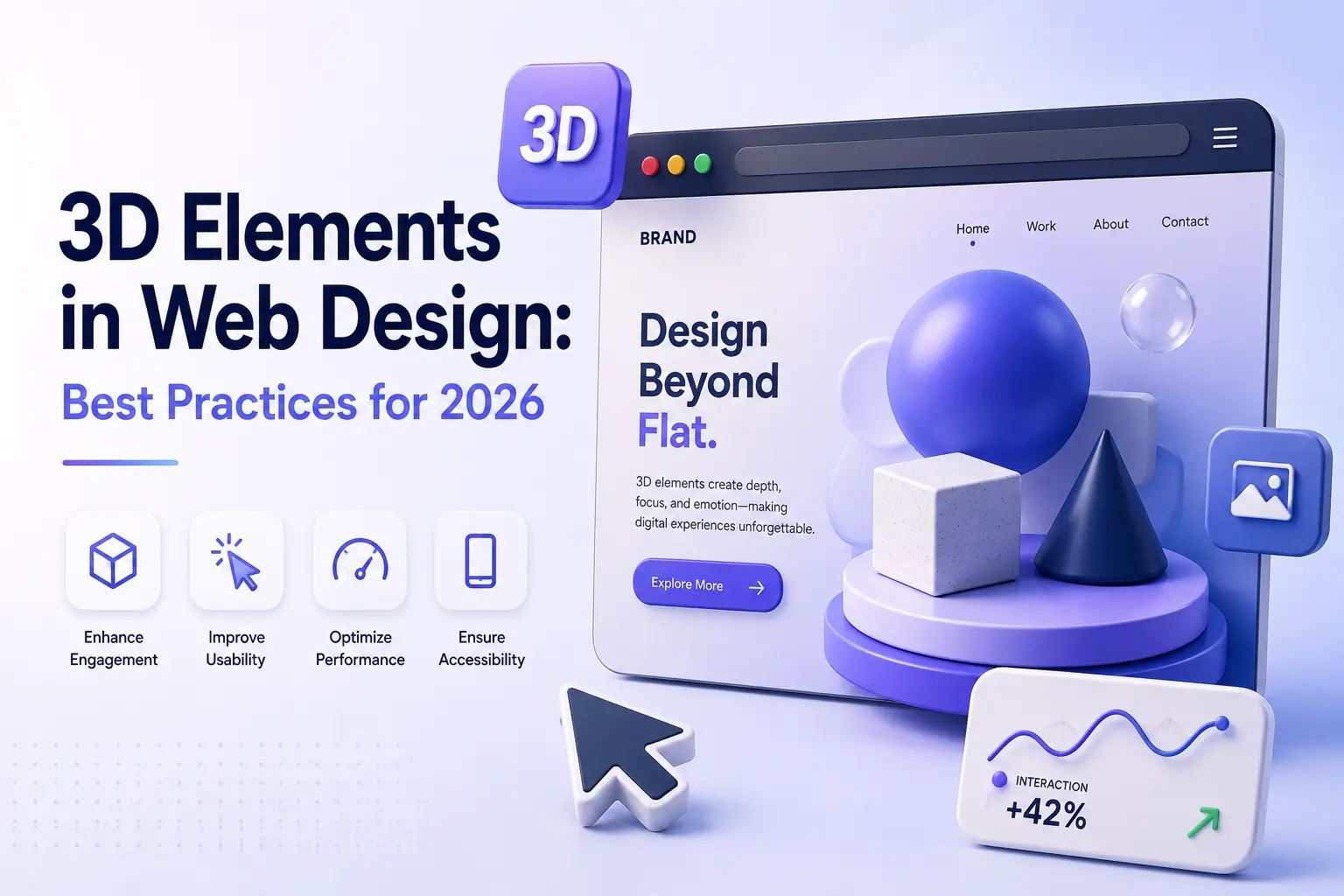
3D Elements in Web Design: Best Practices for 2026
A great transition can be seen in 2026 web design and development. A flat page is not expected by users now, as interactive 3D elements have arrived in the digital market. Every element on a website will give a new experience, such as floating product displays and responsive motion layers. 3D elements not only create an interactive and appealing user experience but are ideal for brand identity. Users will remember you when they get a fascinating and understandable experience. However, brands need to focus on the functional aspect of the website besides using these 3D elements. It is because using them wrongly or excessively can affect a website’s speed badly and reduce its performance, making the audience repel and leave. On the other hand, smart use of them can increase engagement, usability, and conversion rates, leading your brand to success. The following blog will help you understand how to use these 3D elements strategically to improve the performance, user experience, functionality, accessibility, and responsiveness of your website in 2026.
Why demand for 3D features increasing in the current year
Multiple reasons are behind the high demand for 3D elements to achieve an engaging and interesting user interface. They are listed below:
- Faster running browsers and accelerating GPUs
- Enhanced support for WebGL and WebGPU
- Better optimized frameworks
- More powerful mobile devices
- User expectations are increasing over time
- People expect brands to be remembered for exclusiveness
WebGL supports modern browsers for enhanced speed, while WebGPU supports high performance. The designers are using modern technologies to help them design and develop modern websites. High demand for 3D features is increasing due to high competitive digital environment, and startups and small businesses are striving to get absolute attention. That's why static pages don’t appeal to the audience anymore, as they want to interact with the website rather than just passing by.
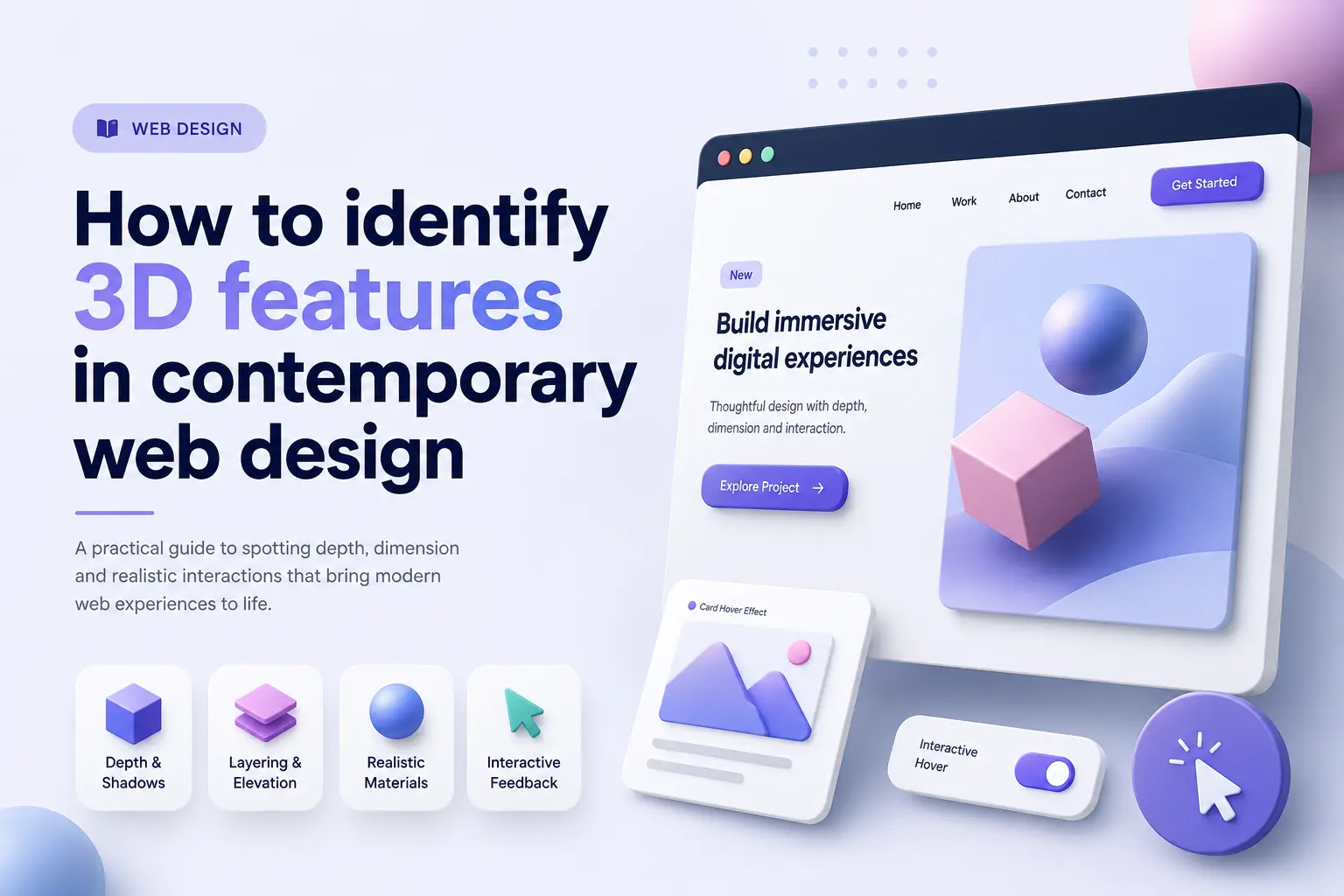
How to identify 3D features in contemporary web design
3D elements in web design are more than rotating objects. They have the following added characteristics:
- You can interact with the product while viewing it
- In-depth scrolling effects
- Movable user interface
- Introduction of glass morphism and shadow effects
- Enhanced distance between white space and content
- Animation in typography
- Interactive features
- AR previews
- Motion graphics
- Layering in micro-interactions
Some websites strategically play with 3D views to give engaging results while balancing performance.
What are the best ways to use 3D elements in 2026 web design
The following are some strategies to use 3D elements without affecting performance and speed:
Use it if needed
It is not used for appealing purposes but must enhance user understanding and solve their queries effectively. Over exaggeration can cause frustration and confusion among the audience, and they will repel instead of attracting and interacting. 3D visuals must be used to enhance the clarity and meaning of the brand. Here is how it must be used:
- It should enhance product visualization through easy rotation, zoom, and inspection, helping buyers evaluate quality before purchasing.
- Easy-to-read content becomes more effective when spatial design factors are properly considered.
- Creating immersive movements can build storytelling experiences in users’ minds and improve information consumption.
- Depth and movement help create visual balance and improve content understanding.
- Your brand becomes more memorable to users over the long term.
The main focus is on the website’s performance
No matter how appealing and interactive you keep your website, if it's not performing well and has a slow speed, users will drive away. Hence, using 3D elements is a strategic approach. The website’s performance can be handled effectively while using 3D elements if the following practices are performed:
- Compress 3D elements to ensure faster loading speeds.
- Manage the performance of 3D designs only when needed instead of loading them on every page.
- Use simple geometry to create visual appeal without frustrating users.
- Use simplified textures with compressed and optimized images.
- Minimize shadows, reflections, and particle systems, as excessive effects can slow down the website.
- Test these features carefully on mobile devices because heavy 3D elements can reduce smartphone performance on smaller screens.
Implement simple navigation
While using 3D features, one important factor to keep in mind is easy navigation. When users feel lost and confused in an immersive 3D environment, they tend to move away despite attractive features. Avoid cluttering of movement to keep navigation easy. How you can manage the navigation while incorporating 3D elements is mentioned below:
- Use clear menus with an understandable structure.
- Avoid scroll seizure effects.
- Keep interactions predictable and user-friendly.
- Ensure 3D views include a reset option for users.
- Limit excessive camera movements.
- Motions in elements should feel smooth and absorbable rather than frustrating.
3D elements must be mobile-friendly
The rise in technology has increased mobile users. Hence, your website is most likely to be viewed on smartphones as compared to tablets and laptops. The 3D elements must work efficiently and effectively on all mobile devices without slowing the speed and performance of the website. How to control that? You can do it in the following ways:
- Limited motion should be used for effective mobile performance.
- Reduce rendering depths for smart performance.
- Use simple movements.
- Focus should be clear through limited background movements.
- Avoid continuous rendering as it can affect performance.
Intelligent combination of 2D and 3D elements
You can see that websites in 2026 use fewer 3D elements and instead use 2D images and create a 3D effect in them. It creates balance and improves the speed and performance of the website. It can be done through the following:
- Limited motion should be used for effective mobile performance.
- Reduce rendering depths for smarter performance.
- Use simple and smooth movements.
- Keep the focus clear through limited background motion.
- Avoid continuous rendering because it can negatively affect performance.
Intelligent combination of 2D and 3D elements
You can see that websites in 2026 use fewer 3D elements and instead use 2D images and create a 3D effect in them. It creates balance and improves the speed and performance of the website. It can be done through the following:
- Using simple layouts with integrated 3D effects.
- Floating user interfaces.
- Highlighted hero sections to direct user focus.
- Deeply crafted typography.
- Soft glass morphism layers.
- Soft parallax systems.
The website should be accessible
Accessibility is one of the main factors to consider while designing a website, especially with 3D elements. The website should perform for every type of user. The users with:
- Visual problems
- Motion sensitivity
- Cognitive problems
- Outdated devices
- Slower running internet
People can face any problem while interacting with your website, on their end, but your website should effectively perform to avoid these problems. The best practices to avoid these problems can be:
- Make it easy for users to stop animations when they face difficulty in using the website.
- While using 3D elements, make sure it doesn’t affect readability.
- The website must work with a keyboard rather than with a mouse.
- It is not necessary to highlight important content with a 3D effect.
- Don’t use excessive amounts of movement as it can lead to frustration and confusion.
It's ideal to conduct deep research on how and what to use in a website to make it functional, besides being attractive; accessibility is a strong factor of web design in 2026.
Intelligent use of motions
You can feel a strong connection between 3D elements and their motion. However, motions should attract users rather than repel them from the website. The best way to keep it simple and engaging is to use micro-interactions with soft movements. The techniques that work in 2026 are given below:
- Hovering effects
- Scroll-based transitions
- Floating user interface
- Interactive buttons
- Subtle tilt of animations
- Depth-oriented feedback
To achieve the best 3D effects with enhanced performance and functionality of the website, you should think about connecting with a Web Designer in Atlanta as they are experts and experienced to create unforgettable user experiences.
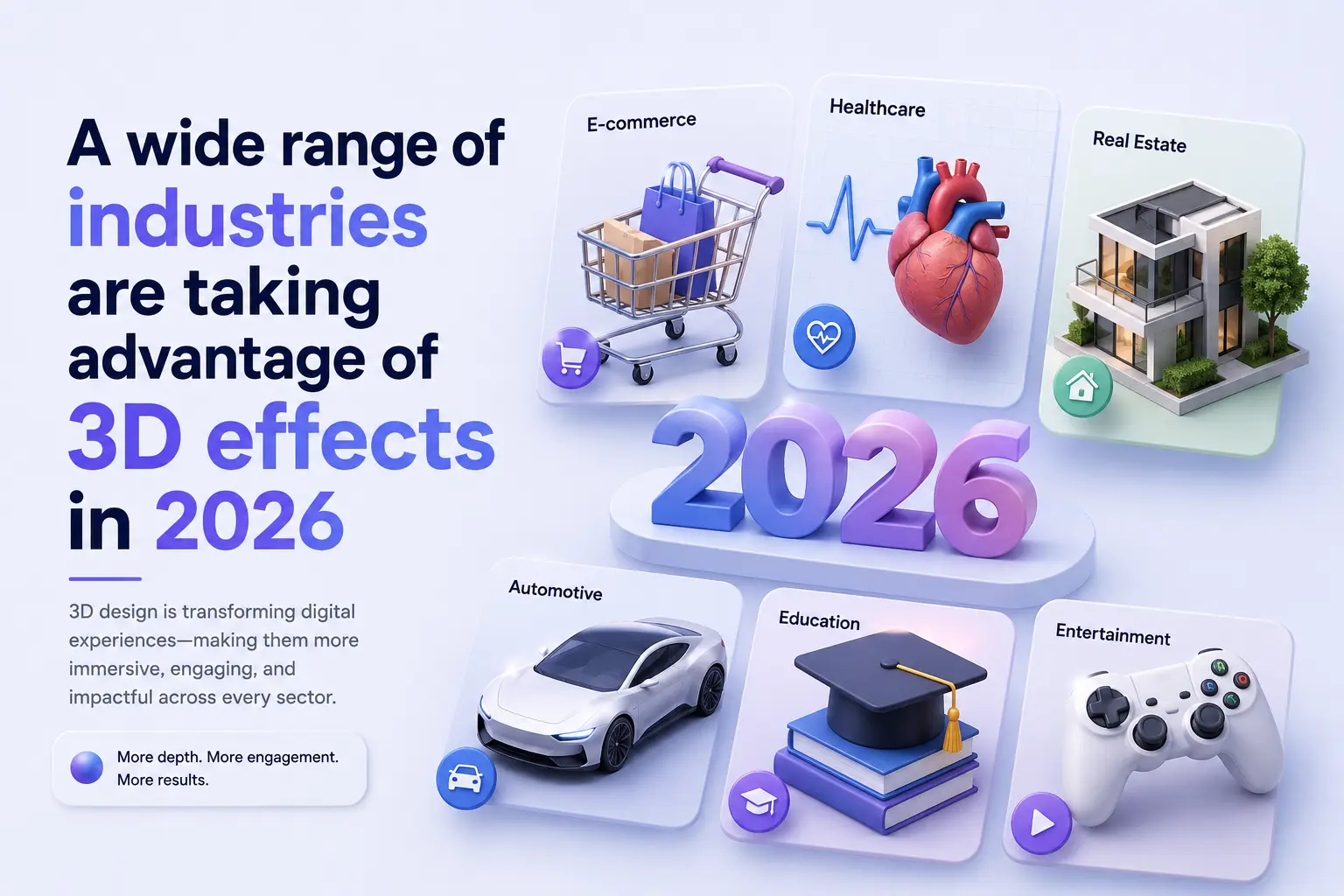
A wide range of industries are taking advantage of 3D effects in 2026
The rise in technology has led brands and businesses in Atlanta to think about getting 3D and engaging effects on their websites to attract their target audience and encourage them to connect instantly. The strategic use of such features has increased conversions and the number of buyers over time. Let’s take a look at some industries taking advantage of such designs:
E-commerce industry
As the number of mobile users has increased over time, so has the 3D visualisation. To attract buyers to your e-commerce platform and encourage them to buy, 3D effects have become a big game-changer.
Real estate industry
The use of 3D elements in spatial visualisation and walkthroughs has made it easy for buyers to check the location while sitting at home.
Technology brands
Interactive storytelling can help users to visualise new technological devices effectively, convincing them to buy.
Architecture and interior design
A 3-dimensional view allows users to check the location before construction.
Education industry
Complex lectures are easy to understand with 3D diagrams and simulations.
While working with Web Designer Saad, you can achieve an effective 3D design that will drive organic traffic towards your brand and increase your conversions.
Conclusion
As the digital landscape in Atlanta is rising over time, 3D elements have become a part of Web Design because they create modern and updated websites. The strategic approach is to create a balance between the movement of elements and the understanding of the site’s content. It should create an engaging appeal rather than promoting confusion and distraction. Through best practices in 2026, you can achieve an effective balance between functionality, high performance, and 3D effects.
FAQ's
How to enhance user experience with 3D elements ?
+What if I don’t use 3D visualisation ?
+Can 2D and 3D visuals combined ?
+





Leave a Reply