© 2026 Web Designer Saad | All Rights Reserved
Atlanta, USA
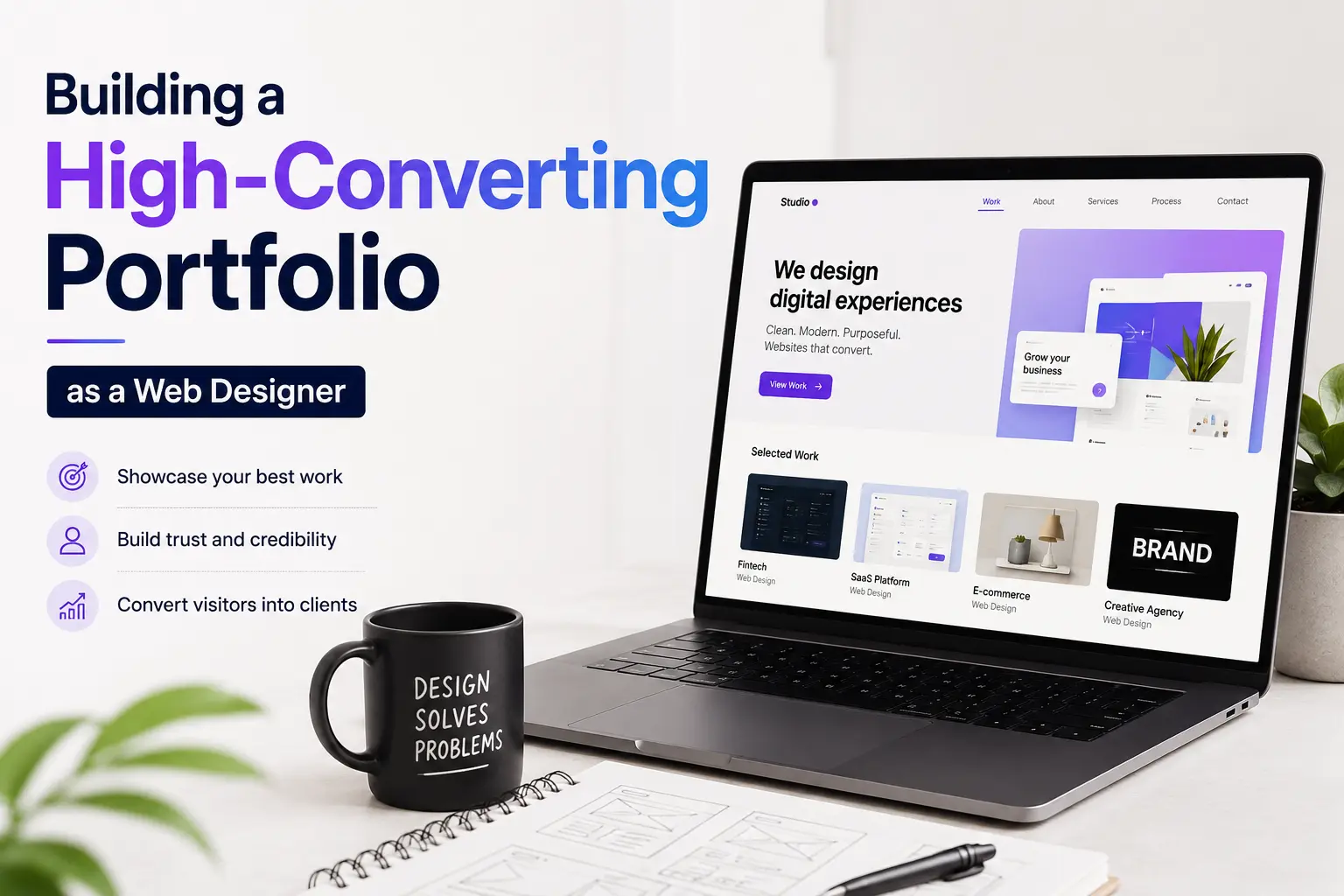
Building a High-Converting Portfolio as a Web Designer
A portfolio is the foundation of a designer's career on which clients connect. Web designers are getting in demand as businesses tend to shift online. They want to connect with the web designers to craft an appealing and creative online identity. The more brands are incorporated, the more web designers can be seen. But how businesses select the right choice for them depends strongly on the designers’ portfolio. It is because a portfolio displays their expertise, experience, and design quality. It is the first thing the client sees before collaborating with the designer. It builds trust, shares expertise, and converts the audience into high-paying buyers. The portfolio doesn’t consist only of visually appealing designs, but also contains strategy, creativity, technical skills, storytelling, and a user-oriented approach. It combines a designer’s experience for all types of industries so that brands can better choose the ones skilled in their industry. It tells about the project size and pricing, too, which the designer will charge according to the type of business. The following blog will help you know about the right way of drafting an extraordinary portfolio to gain maximum clients.
Why is a portfolio needed for the client approach
The clients will first view your portfolio in detail before approaching you. Through your website, they can see your portfolio and judge your credibility and performance by the organisation of elements. If they feel your portfolio is confusing and not up to their expectations and design needs, they will immediately shift to another designer. But if your work represents aesthetics, strategically designed visuals, work command, professionalism, user-friendliness, and the ability to solve issues, then the client will contact you immediately. You need a high-profile portfolio to:
● Attract valuable clients
● Build powerful impact
● Increase questions and conversions
● Display your style
● Distinguish yourself from your competitors
Get familiar with your client
You must have a particular client dimension that you want to connect with. Focus on adding works that attract them. Don’t pull in extra design ideas that belong to all types of industries and businesses. It will create chaos in your portfolio, and the right client will get confused about whether you are ideal for their project or not. Distribute your portfolio in multiple niches or focus on just one in which you have the highest command. It will produce a clear dimension portfolio, and the right clients can approach you effectively. Make sure about the following factors:
● The type of businesses you want to connect with
● The size of the business
● And what kind of design are you an expert in that is minimalistic, conversion-focused, or enterprise-level?
Your portfolio should explain the details of the projects you are an expert in so that the right client comes and relates to it for building a strong relationship with you. It will build trust and confidence among them to choose you as their right option.
Provide good quality designs and avoid chaos
To prove your credibility and expertise, you should mention your best projects in your portfolio. Avoid adding poor-quality work. It will confuse the client about your specialisation, and they might run away. Built it short, focused, conversion-oriented, and trustworthy. The right project can possess the following elements:
● Problem-solving capabilities
● Impactful and powerful designs
● Improved UX
● Higher business results achieved
● Versatile designs in your genre
The client comes with an objective that they need their website. Keep the projects that fulfill their requirement and not just an additional part. Have those projects that you further want to take and delete others. It is because the client only connects when they see the solutions to their problems.
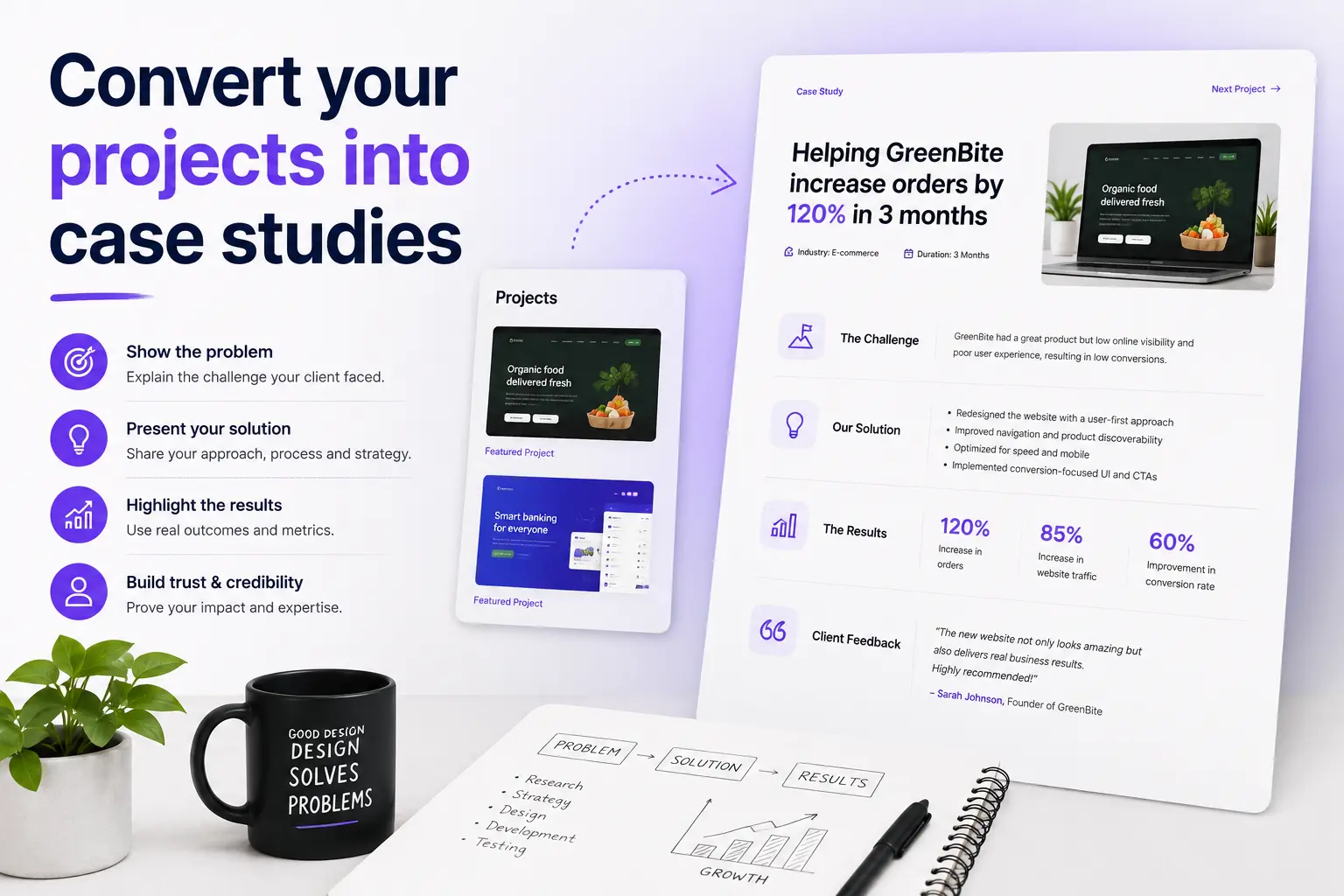
Convert your projects into case studies
Case studies show your experience and expertise in the particular niche over time. Add an authentic story to your projects to let the client know how hard you have worked on the project and what results you got. If they connect with you, they will get exclusive results and success. Case studies build trust and credibility in your profession. The factors that powerful case studies include:
Clients’ problems
It encompasses the challenges faced by the clients, such as slow-loading websites, poor mobile responsiveness, poor branding, more bounce rates.
The final solution
Incorporate the final design into it with a polished appearance. Explain with it how you approach it and why that decision was taken.
How you handled the query
Explain how you solve your client’s issue. It will let the future clients believe that you can not only design exceptionally but can also handle the related issues effectively. The rectified issue will include:
● Wireframing
● Research
● UI/UX decisions
● Strategic thinking towards brand identity
● Building responsive design
The results you got
State what kinds of results you achieved after making the changes. They can include better performance, increased conversions, fast-loading speed, more engagement, and better SEO.
Craft a compelling homepage
The homepage is the part of your website that defines you and your work. It is the first thing your client sees and makes judgments. Hence, make it clear and understandable for them to connect. The ideal homepage consists of the following parts:
Hero section: It is the part that can impact clients. Insert a clear heading that provides information about your expertise and experience. Add to it an attractive call-to-action that compels the clients to take positive actions.
Finished projects: share your best works here so that the client moves forward to connect with you. It will grab their attention instantly and encourage them to explore further, while staying on your website.
About section: make it concise and add your experience, work expertise, and design thinking.
Testimonials: It is a section where you share your clients’ positive feedback about connecting with you. It will make you achieve high conversions and more clients.
Contact CTA: end your page with a strong and impactful call-to-action so that your target clients can easily and immediately approach you.
Work on an attractive and smooth UX
A portfolio website must be clear, understandable, easy to navigate, and useful for the client to view your projects in detail. That's how they will connect to you rather than stepping back. Make it easy to navigate while designing beautifully. Make sure your portfolio is:
● Adaptable to any device
● Fast-loading
● Clear and interesting
● Address clients’ issues
● Displayed diversity in design thinking
● Readable typography
● Clear spacing
Remember that your portfolio speaks to your design quality and expertise in delivering strong UX. Hence, avoid extra designs, animations, and confusing layouts. Make it to the point.
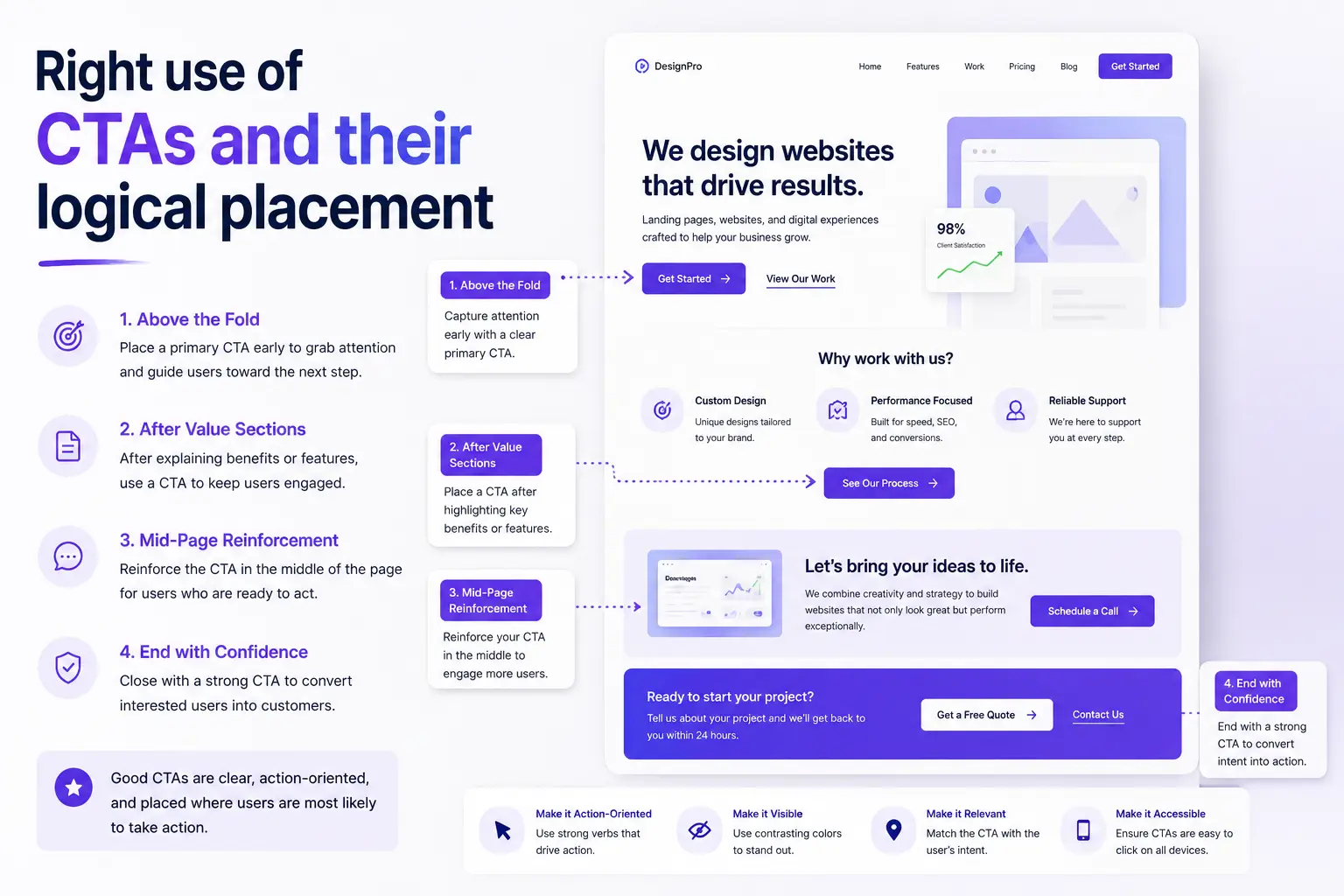
Right use of CTAs and their logical placement
Call to actions are buttons that divert the client's focus towards action. Hence, it must be logically placed on the website where it is clear and connects with your work. Use understandable CTAs that move forward with positive actions. They can be:
● Make a call
● Get a free quote
● Limited-time offer
● Get a big discount
They should be crafted to place organically and be visually appealing to divert attention.
Exhibit social proof
It helps build trust in your potential clients that you can actually work ideally and deliver expected results, and it is not just a promotion or a myth. It can include:
● Reviews
● Brand logos
● Brand logos
● Awards and certifications
● Video reviews
Optimise portfolio for SEO
If your portfolio is optimised with SEO, you are more likely to reach your target clients. It helps improve your visibility in the designer-rich digital landscape. The ideal SEO strategies include;
● Use relevant keywords and naturally insert them in the content.
● Optimise images by using compressed files so that they can load fast without compromising their quality.
● Add helpful blogs that prove your credibility and build authority.
● Improve speed by adding clean code, caching, and suitable hosting.
Get an attractive personality
Clients not only fall for your design work but also judge your way of communicating things and your professional personality. Always craft a professional and original portfolio that genuinely represents your work.
Provide an easy way to communicate
Most of the clients run away because of the confusing style of contact information. Make it simple to let them understand and connect to you easily, such as provide name, contact, and project type. Let it be concise and simple. You can receive more orders and connections through a simplified contact procedure. Web Designer Saad will provide you with an easy way to connect and will respond promptly upon your connection request.
Update your portfolio frequently
Updating your portfolio lets them know you are active and working continuously, adapting to new technologies, learning over time, and improving tremendously. You can witness a Web Designer in Atlanta with an updated portfolio frequently. It shows your skills and services, testimonials, old projects, and accomplishments, etc.
Conclusion
Invest time and energy in crafting a strong and valid portfolio, as it is the first and major thing the client reads and evaluates before connecting with you. It proves your credibility, expertise, and experience in a well-organised manner. The client will trust you to connect with them by analysing your portfolio. It shouldn’t be created once but frequently updated to ensure your credibility and performance over time. By following the above guidance, you can improve your portfolio and enhance your client engagement and relationship.
FAQ's
How does a portfolio help in building relationships?
+How can I improve my portfolio’s visibility?
+What should I work on in my portfolio?
+





Leave a Reply